
Hi Tiffany, thanks for joining us today. Was there an experience or lesson you learned at a previous job that’s benefited your career afterwards?
One of the most important lessons I’ve carried into my own art business is that being an artist extends far beyond making the work itself. My path here wasn’t a straight line, and looking back, I can see how much each step along the way shaped how I approach my own practice now. Early in my career, I worked at a nonprofit arts organization that gave teenagers access to a range of creative disciplines. I was a photography mentor and teacher, showing young teens how to use manual film cameras, develop their own film, make silver gelatin prints, and ultimately mat and frame their work. What made the experience particularly meaningful was that we didn’t stop at teaching them how to make something. We taught them what happened afterward: how to talk about their work, write an artist statement, present it professionally, think about an audience, and participate in an exhibition. It was one of the most meaningful experiences of my life, leading young artists, most of whom have gone on to become artists themselves!
I also worked at a frame shop, matting and framing reproduction prints, partially out of necessity, being new to the city and wanting a job in my area of interest. I ended up genuinely loving it, and honestly, still do. There’s something magical about the effort it takes to finish an artwork, and I always felt a real sense of satisfaction in that part of the process. The hours of work that go into making art deserve a beautiful presentation of it, whether it be in galleries or homes.
Along the way, I also co-founded my own wedding photography business, which meant countless hours photographing and post-processing. I learned quickly how to color balance and see color, a skill I carried directly into photographing my own work for reproductions and fine art prints, a skill I still lean on today. I reflect on color on a regular basis and the relationship of color in my own work. My fascination with using color through my own artistic process was initially introduced in past jobs and early undergrad courses. In fact, I took the last analogue color processing class in undergrad which was a strong foundation in understanding the use of color.

There’s a level of care involved in taking on all of these aspects of making art, and honestly, I enjoy the multifaceted nature of it. Teaching and talking about art, finishing and exhibiting it; documenting and marketing it all surrounds the work in some way: making it accessible for people to see and enjoy, and sharing it in a way that complements the work rather than distracts from it. That’s the lesson I keep coming back to as a business owner. The work is only part of the equation. Today, I’m Curator of Engagement, designing programs around art, which is the perfect hybrid of working with artists and studying both contemporary art and art history. It puts me in dialogue with both exploring art with others and making it.
Great, appreciate you sharing that with us. Before we ask you to share more of your insights, can you take a moment to introduce yourself and how you got to where you are today to our readers.
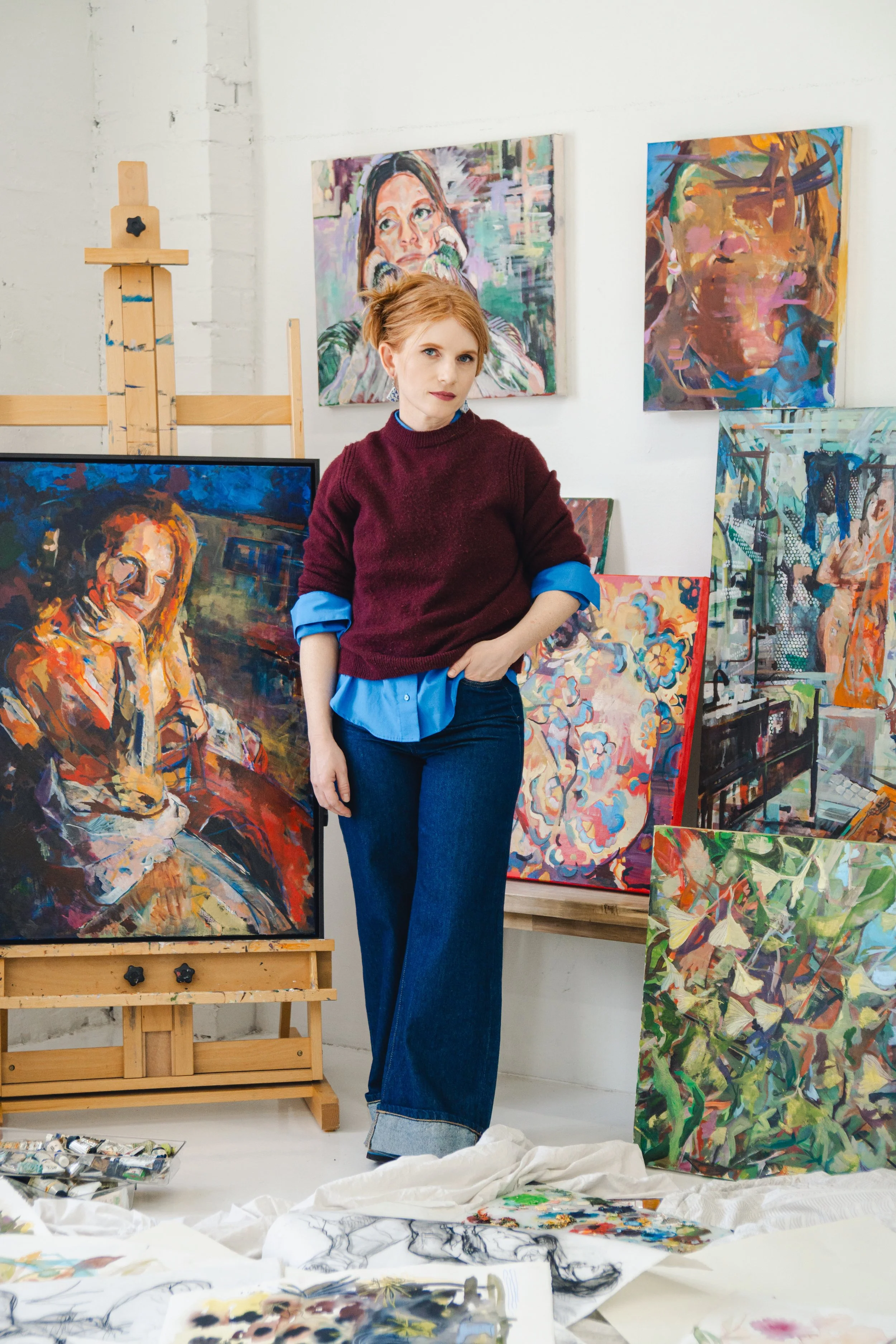
I am an artist; I have always loved making things and the magic that comes with discovery. I’m forever curious about the “what if,” that little voice that whispers, I wonder what would happen if I do this? That curiosity is how I explore life. It’s interesting, in fact, that I have never been afraid of the unknown in art. I have always appreciated art’s ability to allow a certain level of vulnerability and honesty in the creative process. There are no limits in art, only the ones we gently learn to release.
I was raised in a small town in the midwest, surrounded by a tight-knit community of lifelong friends who felt like family, and that sense of rootedness still shows up in how I approach my work today. I currently reside in Phoenix, AZ. My path started with a BFA from Northwest Missouri State University, where I received a double emphasis in painting and photography, a pairing that has shaped my work ever since.
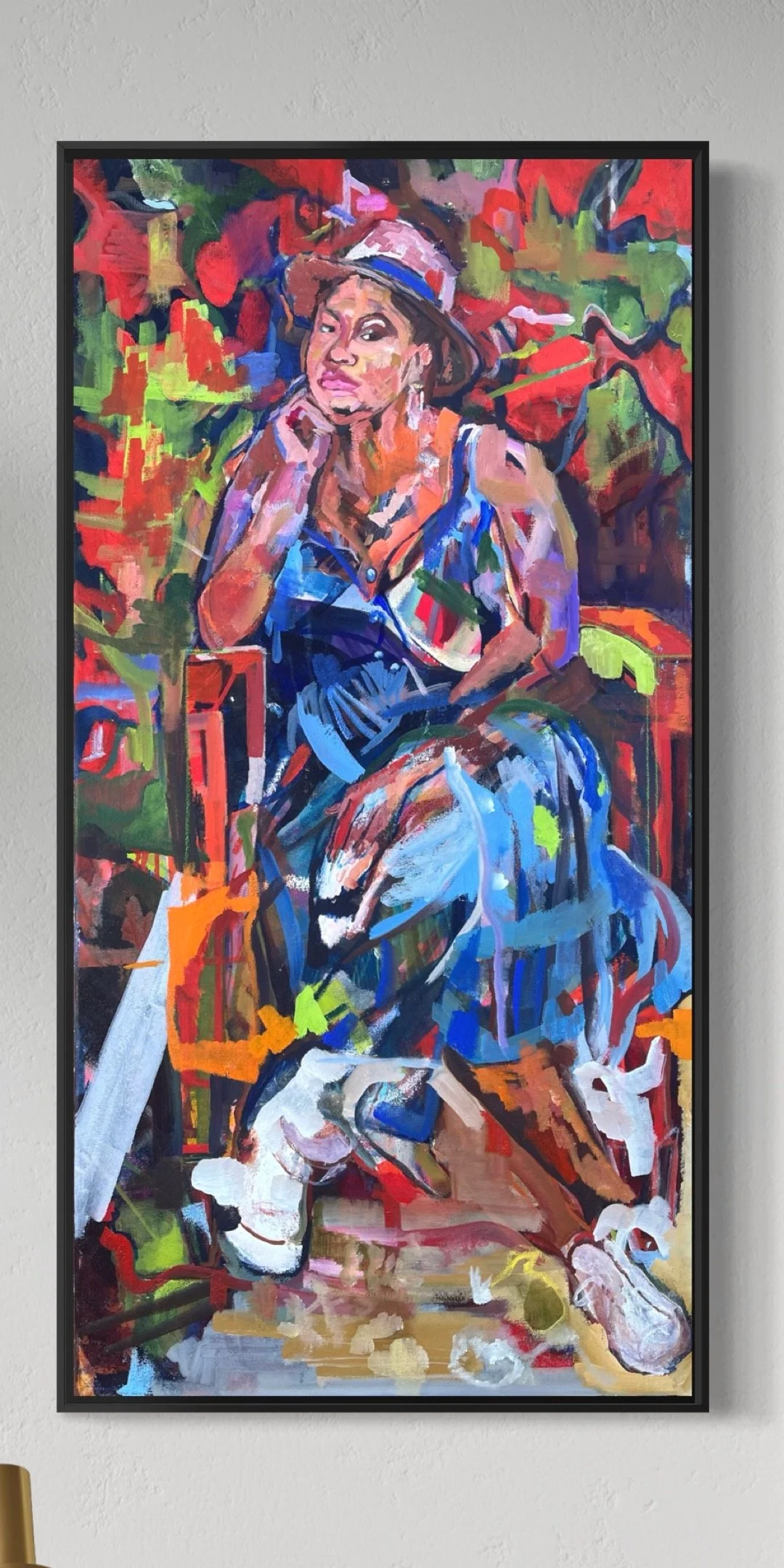
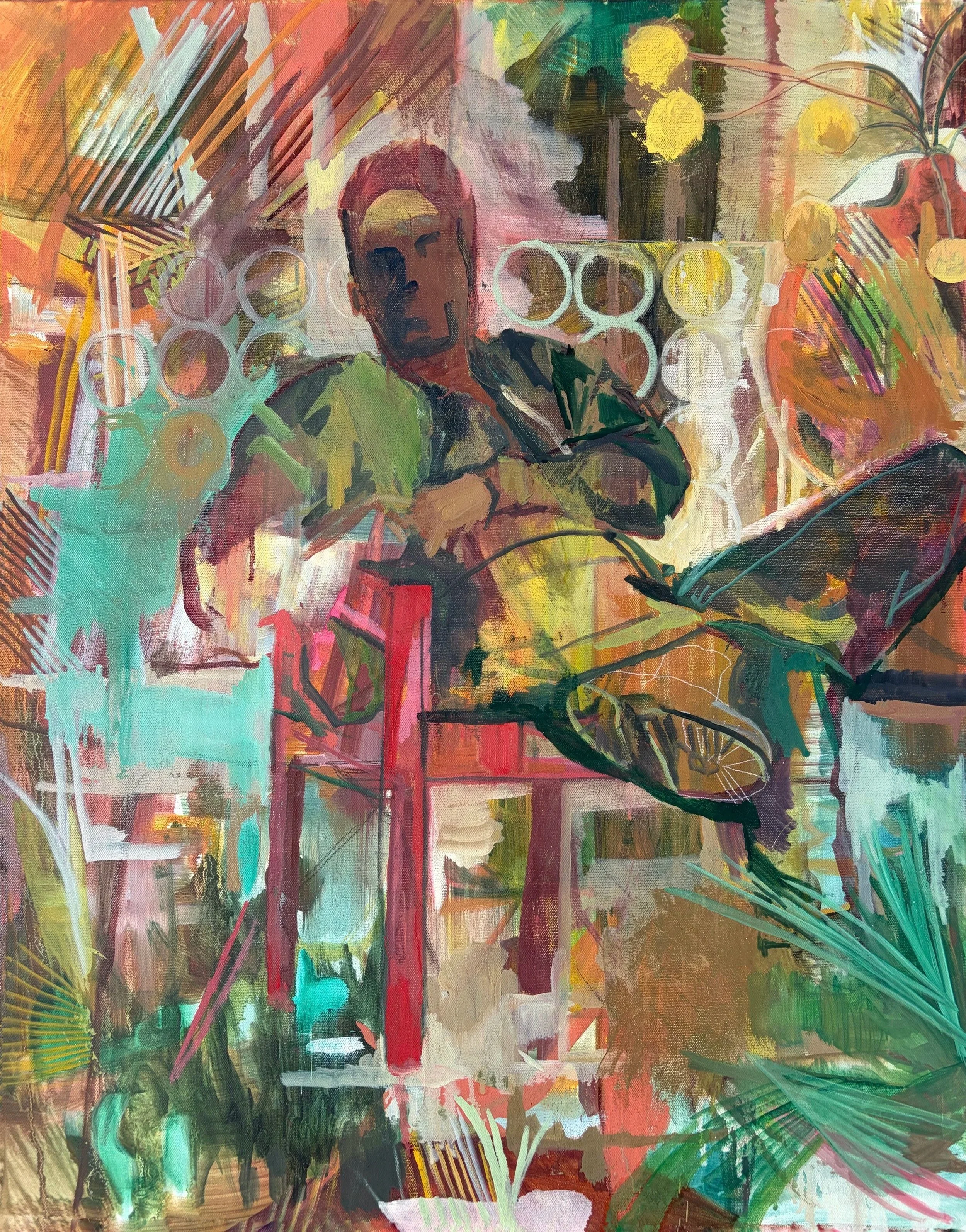
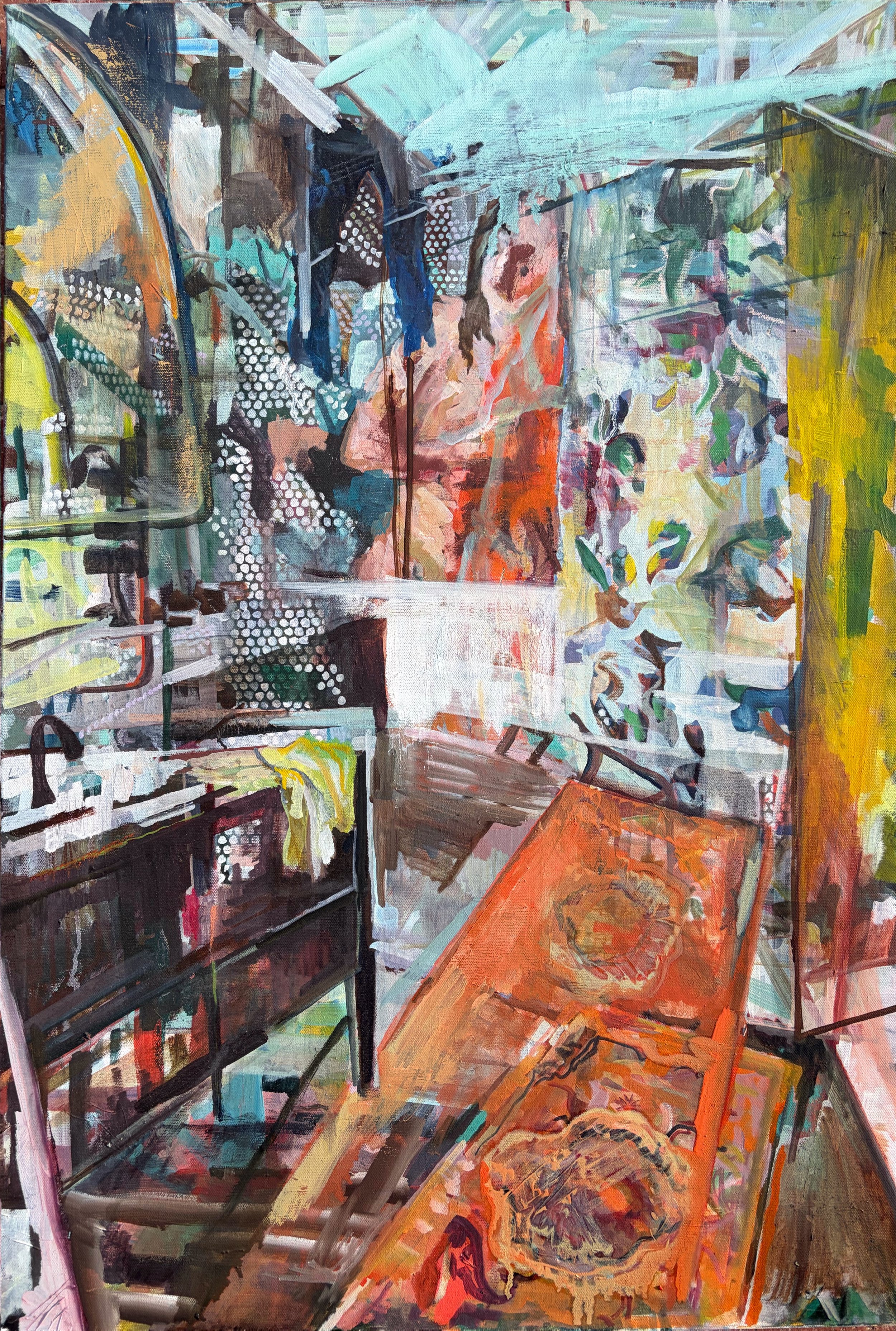
I’m drawn to the push and pull between loose, unexpected mark-making and the more precise qualities of a photograph, and much of what I make lives in that space between a memory and a moment. That interest carries directly into the paintings themselves, which are rooted in pattern, color, and mark-making. I work primarily in oil on canvas, using expressive, impressionistic strokes to bring energy to figures, interiors, and everyday scenes. I often begin with something small I’ve observed, a pattern on a shirt, an unexpected color combination, and let the piece evolve intuitively rather than planning it out in advance. Part of how that intuition stays sharp is a practice I’ve kept for the last three years: one painting a month, every month, without fail. It started as a personal challenge, a way to heal from some difficult things I was going through and put my energy into making something instead of spending it on worry. What I’ve learned since is that showing up consistently, sitting with yourself in a studio where it’s entirely up to you which mark to make, is where the most magical discoveries happen. That consistency has also changed how I think about my own identity as an artist. I’m forever impacted by a phrase from art critic Jerry Saltz: make an enemy out of envy. I used to think a certain amount of success was required to call yourself an “artist.” I’ve since set that expectation aside and looked instead toward what actually matters to me. Art is a personal path; it’s where I make my own music with paint and the discoveries constantly push me forward.
For you, what’s the most rewarding aspect of being a creative?
When I begin any work, I might not always know right away which direction it’s going in. But behind every painting I make, each decision and each mark is a reflection of who I am in that exact moment. There’s no greater joy for me than the opportunity to share who I am through art.
I once heard someone say that painting is about more than what appears on the front of the canvas. For me, that is deeply true. Painting gives me a way to communicate something I don’t have words for. My work is a window into what matters enough to me to pick up a brush and turn the essence of that inspiration into something tangible. This, for me, is the joy of being alive: to have a soul, a mind, and experiences that shape what is put onto canvas.
I still think about something a drawing professor told me in college: that when you draw, you’re utilizing your feelings, your experience, and who you are in that very moment, and putting it into a visual language. Pick up the charcoal again the next day, and you’re a different person, so the drawing will be different too. That idea has stayed with me ever since, and it’s exactly why art continues to ask more questions than it provides answers. My mind is constantly curious, wondering, pondering, exploring, often in an introverted manner. The quietness of my creative practice, one that relies on materials and my own inner intuition, pushes me to create things I may not have words for or know how to explain. Being an artist means putting visual information out into the world and leaving it there. I love the freedom in that.

Is there something you think non-creatives will struggle to understand about your journey as a creative? Maybe you can provide some insight – you never know who might benefit from the enlightenment.
I try to capture the essence of something in my work: an energy and mood that sits somewhere between what feels familiar, something you’ve seen before and half remember, and what looks like a moment in time, but without the detail of realism. That’s the balance I hope to achieve. What I wish people would remember is that it doesn’t always have to make visual sense; not all the information is always there. For me, art asks more questions than it gives answers, and I think that’s exactly the openness I appreciate about it.
I also find comfort in my own artistic space. There’s a quote from Alice Neel that has always stayed with me: “The minute I sat in front of a canvas I was happy. Because it was a world, and I could do what I liked in it.” That’s it, exactly. That’s the whole journey, distilled. The canvas has always been my world, one where I get to make the rules, break them, and find out who I am in the process. That process is different and unique for everyone, and I’m grateful for art’s ability to draw out something different in each of us. It’s what makes art alive!
Thank you for your time and the opportunity to learn more about my work and process.